Heat Pump Services in Galveston, TX

Heat pump installation, repair & maintenance for coastal homes. One system heats AND cools. Corrosion-resistant installs. Free estimates.

Call (409) 599-1948
Same-Day Service
Licensed & Insured
100% Satisfaction

Heat Pump vs. Furnace: Which Is Better for Galveston?

For Galveston, the heat pump wins — and it isn't close. The island's mild winters, with temperatures rarely dipping below 40 degrees for any sustained period, put heat pumps squarely in their peak efficiency range. A heat pump doesn't generate heat the way a furnace does. It moves heat from outdoor air into your home, and it does this most efficiently when outdoor temps are between 30 and 60 degrees — exactly the range Galveston sees from December through February. One system handles both heating and cooling, which means no separate furnace and AC unit to maintain, repair, and eventually replace. Coastal Eco Heating & Air installs, repairs, and maintains heat pump systems across Galveston Island, Texas City, League City, Dickinson, La Marque, and Santa Fe.

How Heat Pumps Work in Galveston's Climate

A heat pump is essentially an air conditioner that can run in reverse. In summer, it pulls heat from inside your home and dumps it outside — standard AC operation. In winter, it reverses the process, extracting heat energy from outdoor air and moving it inside. Even at 40 degrees, there's plenty of heat energy in the air for a modern heat pump to work efficiently.

The traditional knock on heat pumps is that they struggle in extreme cold — below 25 to 30 degrees. In northern states, that's a real concern. In Galveston, it's essentially irrelevant. The island sees temperatures below freezing only a handful of times per year, and even then, it's typically overnight for a few hours. Modern heat pumps with auxiliary electric heat strips handle those brief dips without issue.

This climate match is why Galveston is one of the best markets in the country for heat pump efficiency. You get true dual-function performance — cooling from April through October and heating from November through March — without the efficiency losses that cold-climate installations face.

No Gas Line Required

A significant advantage for Galveston homeowners is that heat pumps are all-electric. Many island homes, particularly pier-and-beam construction in flood zones, were never plumbed for natural gas. A gas furnace installation in a home without an existing gas line adds $1,500 to $3,000+ just for the line and meter setup. Heat pumps eliminate that cost entirely.

CenterPoint Energy electric rates on the island make heat pump operation cost-competitive with gas heating for the short heating season. When you factor in that the same system also handles your cooling — which runs seven or eight months of the year in Galveston — the total cost of ownership tips heavily in the heat pump's favor.

Corrosion-Resistant Heat Pump Installation

The outdoor unit of a heat pump sits in the salt air 365 days a year. Standard aluminum coil fins, steel cabinets, and basic electrical connections corrode rapidly in Galveston's environment. Inland, a heat pump might last 15 to 20 years. On the island, a standard-component install can show significant corrosion damage in five to seven years.

Every heat pump installation from Coastal Eco uses corrosion-resistant components: coated condenser coils, marine-grade electrical terminals, sealed disconnect boxes, and weather-rated refrigerant line sets. These upgrades add to the upfront cost but save thousands in premature repairs and early replacement. We provide free estimates that clearly show standard vs. coastal-rated component pricing so you can make an informed decision.

Heat Pump Repair and Maintenance

Common heat pump repairs in Galveston include reversing valve failures (system heats but won't cool, or vice versa), refrigerant leaks from corroded coil joints, capacitor failures, corroded contactor points, and defrost board malfunctions. The reversing valve is the component unique to heat pumps — it's what allows the system to switch between heating and cooling modes. When it fails, you lose one function while the other still works.

Our $129 tune-up (reg. $225) for heat pumps includes a full inspection of both heating and cooling functions: reversing valve operation, defrost cycle test, refrigerant level check, coil cleaning, electrical connection inspection for salt corrosion, thermostat calibration, and airflow measurement. We recommend scheduling this in November before the heating season begins, though it covers both modes.

Making the Decision

If you're replacing an aging system or installing new HVAC in a Galveston home, a heat pump should be your starting point. The climate is ideal for it, the all-electric operation avoids gas line costs, and the dual-function design means fewer components to maintain over the life of the system. Call (409) 599-1948 for a free estimate and we'll walk you through the options — system size, efficiency rating, and coastal protection package — tailored to your specific home.

Problems We Fix

Our experts can diagnose and resolve any issue

Reversing Valve Failure

The reversing valve is the component unique to heat pumps — it allows the system to switch between heating and cooling modes. When it fails or sticks, you lose one function while the other still works. A heat pump that cools fine but blows cool air in heating mode has a reversing valve problem.

Refrigerant Leaks from Corroded Coil Joints

Salt air attacks copper refrigerant lines and solder joints on the outdoor coil. Slow refrigerant leaks reduce both heating and cooling capacity over time. You may notice the system running longer than normal, ice forming on the outdoor coil, or the home not reaching the thermostat setting.

Corroded Contactor Points

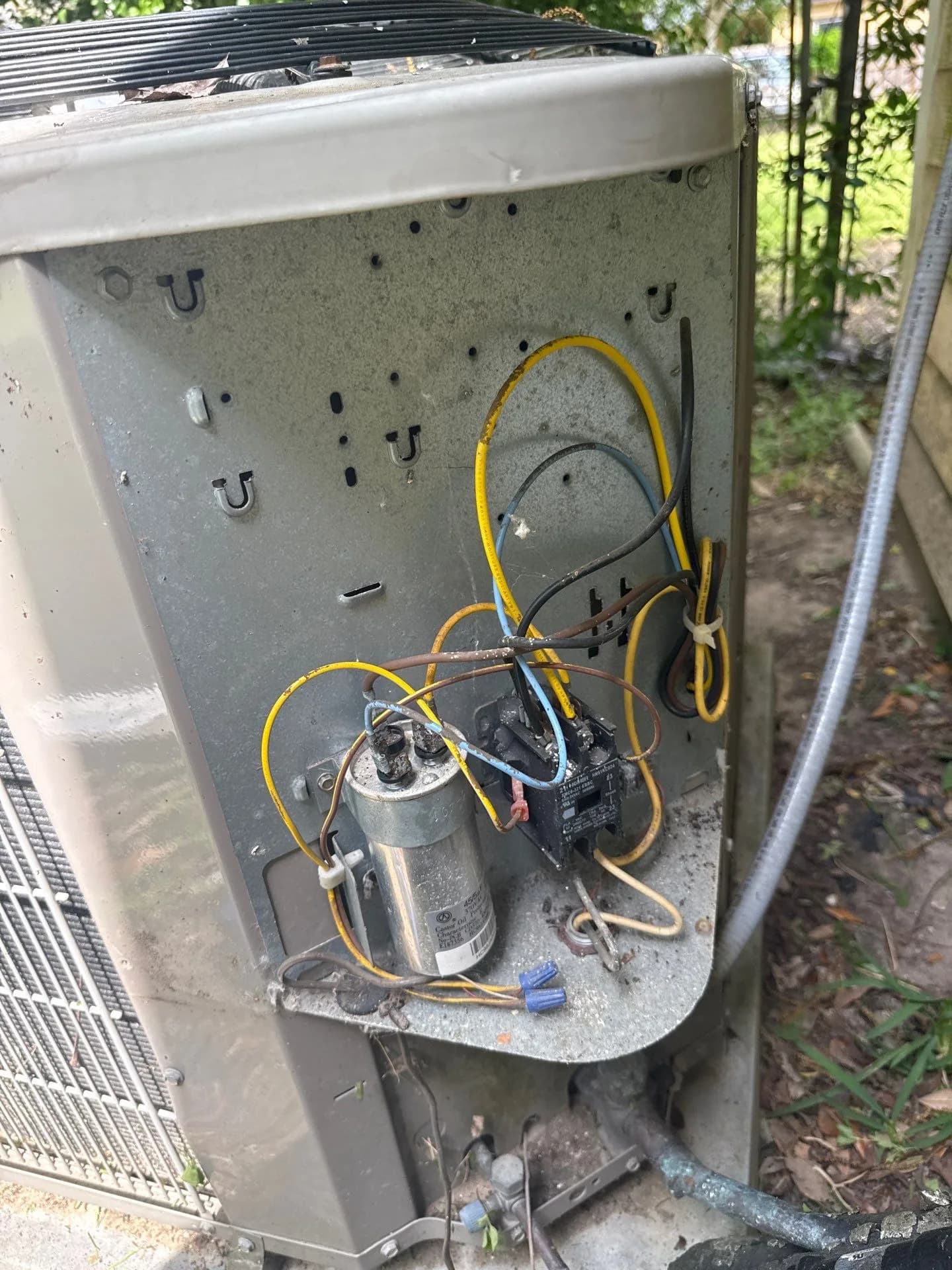
The contactor is an electrical switch that sends power to the outdoor unit. Salt deposits on the contact surfaces prevent a solid electrical connection, causing the outdoor unit to fail to start or to cycle on and off erratically. This is the number one cause of heat pump failures we see on Galveston Island.

Defrost Board Malfunction

During heating mode, the outdoor coil gets cold and collects frost. The defrost board triggers a defrost cycle to melt ice buildup. When the board fails from moisture or corrosion, ice accumulates on the coil, blocking airflow and severely reducing heating capacity.

Capacitor Degradation

Capacitors store the electrical charge needed to start the compressor. Gulf Coast heat and humidity degrade capacitors faster than dry climates. A weak capacitor causes hard starts that strain the compressor; a failed capacitor means the outdoor unit hums but does not run.

Auxiliary Heat Strip Failure

Electric heat strips provide backup heating during the coldest temperatures. If strips fail from corrosion or burnout, the heat pump alone cannot maintain comfortable temperatures when it drops into the 30s with Gulf wind chill — exactly when you need the backup most.

Why Choose Coastal Eco Heating & Air for Heat Pump Services

We're your trusted partner for all Heat Pump Services needs

Professional Heat Pump Services technician at work

Year-Round Heat Pump Specialists

Heat pumps run 12 months a year on the Gulf Coast — cooling from April through October and heating from November through March. We service both functions and understand the interaction between heating and cooling modes, including the reversing valve, defrost cycle, and auxiliary heat that make heat pumps different from standard AC systems.

Corrosion-Resistant Installation and Repair

Every heat pump installation and repair uses components rated for salt air exposure — coated condenser coils, marine-grade electrical terminals, sealed disconnect boxes, and weather-rated refrigerant line sets. These upgrades add to the upfront cost but save thousands in premature repairs and early replacement.

All-Electric Expertise for Island Homes

Many Galveston homes have no natural gas service. We specialize in all-electric heat pump systems that eliminate the need for gas lines, gas furnaces, and the associated installation costs. One system, one energy source, simplified maintenance and billing.

Honest Efficiency Analysis for Gulf Coast Climate

We provide real operating cost comparisons using Galveston-specific data — CenterPoint Energy rates, local winter temperature profiles, and your home actual heating load. No generic efficiency claims. You see exactly what a heat pump will cost to run compared to your current system.

Frequently Asked Questions About Heat Pump Services

Get answers to common questions about our heat pump services services

Is a heat pump better than a furnace for Galveston?

For most Galveston homes, yes. Heat pumps operate at peak efficiency in mild winter climates, and Galveston winters rarely drop below 40 degrees for extended periods. A heat pump heats in winter and cools in summer with one system — no separate furnace and AC unit. The handful of nights per year that dip into the 30s are handled by auxiliary electric heat strips. For a climate this mild, the dual-function efficiency of a heat pump usually makes more financial sense.

How does a heat pump work in winter?

A heat pump moves heat from outdoor air into your home, even when it is 40 or 50 degrees outside. It uses electricity to move heat rather than generate it — transferring 2 to 3 units of heat for every unit of electricity consumed. That 200-300% efficiency advantage is why heat pumps cost less to operate than electric furnaces, even on the same CenterPoint Energy rates.

How often should I have my heat pump maintained?

We recommend at least one annual tune-up, ideally in November before the heating season begins. Our $129 tune-up covers both heating and cooling functions: reversing valve operation, defrost cycle test, refrigerant level check, coil cleaning, electrical connection inspection for salt corrosion, thermostat calibration, and airflow measurement. Heat pumps run year-round on the Gulf Coast, so they accumulate wear faster than seasonal-only systems.

How long do heat pumps last in Galveston salt air?

With standard inland components, a heat pump on Galveston Island can show significant corrosion damage in 5-7 years. With corrosion-resistant components — coated coils, marine-grade electrical, sealed disconnects — a properly maintained heat pump lasts 15-20 years, matching or exceeding inland system lifespans. The outdoor unit runs year-round and never gets a seasonal break from salt exposure, so corrosion protection is essential.

What is the most common heat pump repair in Galveston?

Reversing valve failures and corroded contactor points are the two most common issues. The reversing valve switches the system between heating and cooling — when it fails, you lose one function while the other still works. Corroded contactors prevent the outdoor unit from engaging entirely. Both are tied to salt air exposure and are preventable with regular maintenance and corrosion-resistant components.