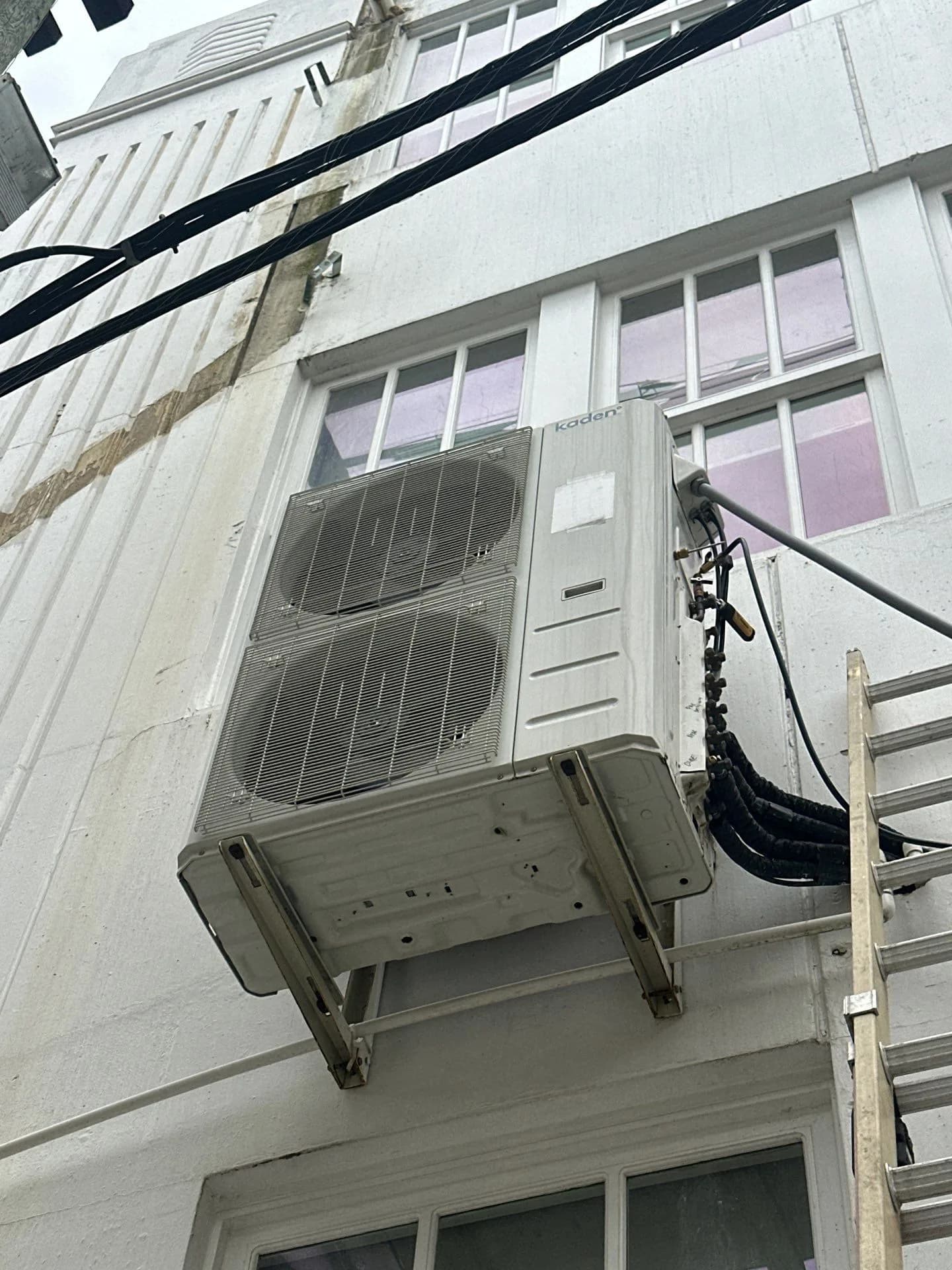
August 2026 in review: 99 jobs across the Galveston Bay area
In brief
August 2026 brought 99 jobs across Galveston, Tiki Island, Texas City, Pearland, League City, and Friendswood, and 64 of them were diagnostic and repair calls. Exactly one was a scheduled maintenance tune-up. The lessons from the month: a compressor replacement is really about six jobs in one, a clogged float switch is the small part that prevents water damage, and on a 100 degree day the building matters as much as the equipment.

August kept us moving from Galveston out to Tiki Island, Texas City, Pearland, League City, and Friendswood, with stops in Jamaica Beach, Dickinson, Anahuac, Houston, and out on Bolivar Peninsula.
Last month we could describe the shape of the month but not the size of it, because our records had a gap in them. August we can count precisely: 99 jobs, worked across 27 separate days, with calls in every week of the month.
The mix: still two thirds diagnostics
Sixty four of the 99 were diagnostic and repair calls. Something was not cooling, or was blowing warm, or had shut itself down, and we came out to find out why. That is the same two thirds ratio as July, which tells us it was not a fluke of one bad week.
The other third: 11 installations, including new condensers in two, three, and four ton sizes, one with a new evaporator coil, ductless mini split systems in both multi-zone and single-head configurations, and two-stage and variable capacity inverter heat pumps. Four jobs were insulation and building envelope work. One was a scheduled maintenance tune-up.
One. Out of 99.
Same finding as July, and worth saying plainly: almost nobody around here has their system looked at before it fails. We would rather tell you your compressor has a couple of summers left than tell you it died on a Saturday.
The rest of the month filled in around that: performance audits, thermostat wiring, condensate drain rework, an ice machine service, and an AC repair on a commercial refrigerated trailer.
Anatomy of a real repair
One August job is worth walking through, because "compressor replacement" sounds like one thing and is actually about six.
The compressor had failed and was covered under warranty, but swapping the part is the easy half. A failed compressor can put acid into the refrigerant circuit, and leaving that in there is a very good way to kill the new compressor too. So the job was: recover the charge, clean up the contamination, replace the metering valve, replace the filter dryer, install the new compressor, evacuate, and recharge with R-410A to spec.
That is why two shops can quote the same repair and mean very different things. Replace a burned out compressor without addressing the contamination or changing the dryer and you have not finished the job, you have scheduled the next one.
There was a second warranty repair in August too, an OEM blower motor swapped out on a hot night at no cost to the customer. Coverage only helps if somebody checks for it and files the claim.
Pro tip: if you are getting a compressor quote, ask whether the filter dryer is being replaced. The answer tells you a lot about how the rest of the work will be done.
The small part that prevents the expensive damage
We also caught a clogged secondary float switch at a commercial property before it turned into water damage. Not glamorous, and exactly the kind of thing we like finding.
Your indoor coil pulls moisture out of the air all day, and that water leaves through a drain line. In August here, the volume involved surprises people. When the line clogs, a float switch shuts the system off before the pan overflows into your ceiling, your inventory, or your server closet. But a float switch is a safety device, not a maintenance plan. When it trips, the cooling stops and the real problem is still in the drain line, and when the switch itself is fouled you lose the protection without knowing it.
When to call a pro: the system shuts off on its own and restarts later, you see water staining near the air handler, or nobody has looked at your drain line in years.
Comfort is the building, not just the box
Four of the month's jobs were about the building rather than the equipment: blown-in attic insulation, hybrid spray foam on a metal building, an inch of closed cell with three inches of open cell over it, and an intumescent coating job. One of those visits paired attic insulation with duct replacement and a refrigerant recharge in the same day.
On a 100 degree afternoon, your air conditioner is not fighting the thermostat. It is fighting heat pouring in through the roof, the walls, and the attic your ducts run through. A correctly sized system in a leaky building runs constantly and still loses ground, and the owner concludes it is undersized. Sometimes it is. Often the building is handing the equipment an impossible job. Metal buildings around the bay are the clearest version: steel has almost no thermal resistance and it sweats, so a hybrid foam assembly is solving heat and condensation at once, and no condenser fixes either one.
What people called about
We took 53 calls in August. Most were systems running but blowing warm on the hottest days of the month. After that: mini split heads throwing fault codes, churches and property managers pricing out replacements, builders and homeowners asking about mini splits for new construction, landlords coordinating repairs on rentals, and a whole-house dehumidifier quote.
Those last two categories, dehumidification and ductless faults, have grown the most this year, and both are coastal. Humidity is a year-round load here, and ductless systems are sensitive enough to tell you something is off instead of quietly running worse.
What the reviews told us
Seventeen new Google reviews came in during August, all of them five stars. The patterns: getting a technician out the same day, being told what was actually wrong in plain language, and the price quoted being the price paid. A few came from customers whose systems had been installed wrong by somebody else and who were not charged extra to have it corrected. Plenty of them named the technician who showed up, which is the part we like seeing most.
One of the odder jobs of the month came back as a review too: a commercial refrigerated trailer with a failed AC, running again in under an hour, for a business well outside our usual scope. We took it because somebody needed it and we could do it.
What we would do with this before fall
Prevention tip: the shoulder season is the easiest time of year to find out what your system actually needs.
- Get the drain line cleared and the float switches checked. Most preventable water damage we see starts there.
- Look up before you look at the equipment. If a room has never been comfortable, walk the attic insulation and duct runs before you buy capacity you may not need.
- Book maintenance while the schedule is open. One tune-up out of 99 jobs is not because tune-ups do not matter. It is because nobody thinks about them until the system is already down.
Frequently Asked Questions
My mini split is flashing an error code. Does that tell you exactly what is wrong?
It narrows things down, but it is a starting point, not a diagnosis. Fault codes report what a sensor is seeing, usually a pressure or temperature reading outside the expected range, and several different root causes can produce the same code. Read it to us when you call anyway, because it tells us what to bring and what to check first.
Does a failed compressor mean I need a whole new system?
Not automatically. It depends on the age of the equipment, whether the compressor is under warranty, what refrigerant the system uses and how available it still is, and how the coil and cabinet have held up against salt air. We have replaced compressors on systems with good years left, and we have also told people plainly that a new compressor in a tired system is not worth doing.
Why would an HVAC company do insulation work?
Because cooling load is a building problem before it is an equipment problem. Air conditioning removes heat from a space, and insulation controls how fast it comes back in. On the Gulf Coast, attic and envelope improvements often do more for comfort than a larger system would, and they let the equipment you already have work less hard.
Why did my AC shut itself off when nothing seems broken?
That is often a safety switch doing its job. The most common one is a float switch on the condensate drain, which cuts the system off when water backs up so it does not overflow into your ceiling. The equipment is not the problem, the drain line is, and clearing it takes a fraction of the time repairing water damage does.
Getting on the schedule
If August showed you something about your system you have been meaning to deal with, now is a better time than the next heat wave. We cover Galveston and the surrounding bay area, residential and commercial both.
Request service and we will get a technician out to look, and we will tell you what we actually find.