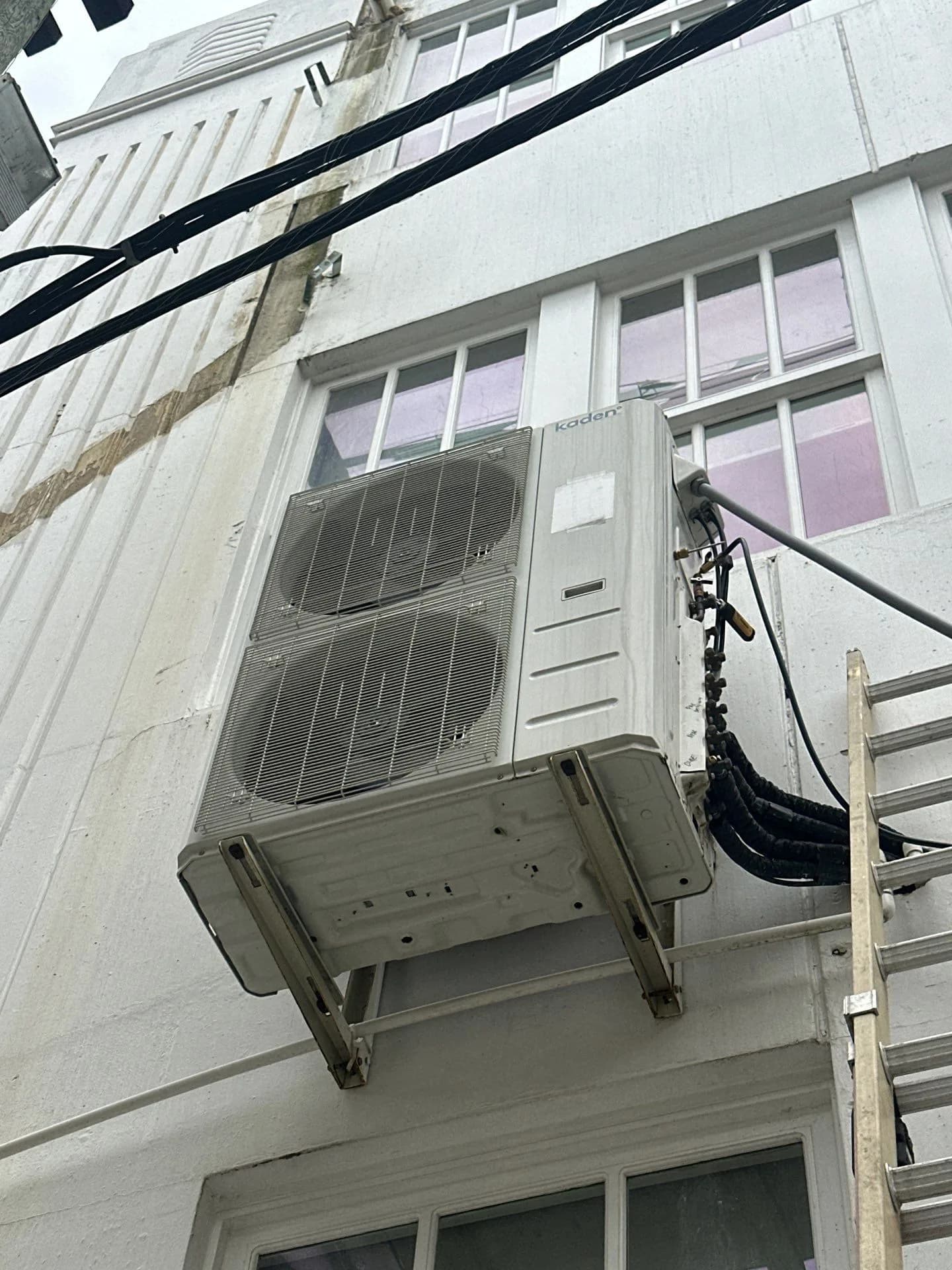
July 2026 in review: what a month of Gulf Coast service calls told us
In brief
July 2026 kept our techs on the road, and roughly two of every three calls were diagnostics on systems that were fine in spring. Peak heat load is when weak capacitors, low charge, leaky ducts, and marginal compressors finally show themselves, so the cheapest month to fix a system is the one before it fails.

July kept us moving across Galveston, League City, Friendswood, and Tiki Island. Every day looked different from inside the truck, but pulled up on one screen, the month had an obvious shape: July is when equipment stops hiding things.
Here is what the board actually looked like, and what we think it should tell you about the system sitting outside your house or behind your building.
The mix: July was a diagnostic month
Roughly two out of every three July jobs were diagnostic visits. Somebody's system was running and not cooling, or not running at all, and we came out to find out why. Some of those were on commercial equipment. Scheduled cooling maintenance was a very small slice by comparison: only a handful of tune-up visits.
That ratio is the story. When most of the calls are "it broke" instead of "check it before it breaks," you are looking at a coast full of systems that were fine in April and simply ran out of margin.
The rest of the month filled in around that: a compressor replacement, two ductwork jobs, a whole-house dehumidifier, a mini split indoor head cleaning, a couple of ice machine and ice maker calls, and two full system installations (a variable capacity inverter driven heat pump package unit and a multi-zone ductless system).
Why July breaks what April did not
In spring, your AC runs in short bursts. A weak capacitor still starts the compressor. A slightly low refrigerant charge still holds setpoint. A restricted return still moves enough air. Nothing is fine, exactly, but nothing shows.
In July on the Gulf Coast, that same system runs close to continuously, at high head pressure, with hot humid air on both sides of the equation. Every marginal part gets tested all day instead of a few times an hour. That is why the diagnostic count climbs: the failures were already there, waiting for the duty cycle to expose them. If your system struggled at all in June, it was telling you something. July is when it stops hinting.
Ducts show up in summer, not in spring
Two of July's jobs were duct work: reattaching supply ducts that had pulled away from the plenum, and installing a package of R-8 insulated flex.
Duct problems are sneaky because the equipment looks healthy. The compressor runs, the coil gets cold, the thermostat reads what it should. But if conditioned air is dumping into a hot attic, or thin duct is soaking up attic heat on the way to your back bedroom, you get a system that runs all day and a house that never quite gets comfortable.
Pro tip: if one or two rooms are always warmer than the rest and it gets dramatically worse in the afternoon, suspect the duct before you suspect the equipment. A compressor does not know which room it is failing.
Humidity is its own job
A whole-house dehumidifier install and a mini split head cleaning came through in July, and both trace back to the same coastal reality: cooling and dehumidifying are related, but they are not the same task.
An oversized system cools a house fast, satisfies the thermostat, and shuts off before it has run long enough to pull real moisture out of the air. You end up at 74 degrees and clammy, which most people read as "the AC is weak" when the real problem is runtime. Ductless heads have a related issue: the blower wheel and indoor coil stay damp in our climate and collect buildup faster here, which is why that mini split needed a proper head cleaning rather than a filter rinse.
When to call a pro: the house hits the set temperature but still feels sticky, windows sweat, or a ductless head has picked up a musty smell when it kicks on.
The cold side has a July problem too
Two of the month's calls were on ice equipment: an ice machine service and a residential ice maker.
Same physics as your AC, different box. Ice machines are rated to produce a certain amount of ice at a certain ambient temperature, and every degree above that costs you production. A machine in a hot back room, an unconditioned garage, or a poorly ventilated kitchen runs longer cycles for less ice in July than it did in March. Add a dirty condenser and scale on the evaporator, and a machine that was fine all spring cannot keep up with a summer rush.
If you run a restaurant, bar, or store on the island, the ice machine belongs on a cleaning schedule the same way the rooftop unit does.
When repair turns into replacement
July also brought a compressor replacement and two full system installations. Peak season is when a system that has been quietly declining for a few years finally gives up, and it is the worst possible time to make a big decision, because you are making it hot and in a hurry.
There is no universal rule for repair versus replace, and anybody who gives you one without looking at your equipment is guessing. We look at the age of the system, what the failed part costs relative to the whole unit, whether the refrigerant is still readily available, and how the coil and cabinet have held up against salt air. Sometimes the right answer is a part. Sometimes the honest answer is that the system has about two summers left.
What we would do with this before August
Prevention tip: three things, in order of how much they pay back.
-
Get eyes on the system now, not in October. The clearest pattern in July was systems failing that nobody had checked before the season started.
-
Rinse the outdoor coil, and be gentle about it. Salt aerosol off the Gulf and the bay builds on outdoor coils faster than it does inland, and a fouled coil cannot reject heat. A garden hose from the inside out, with the power off, is a homeowner-safe job. Pressure washers and coil fins do not mix.
-
Change the filter on a summer schedule. Whatever interval you use the rest of the year, shorten it while the system is running this hard. Restricted airflow is the most common thing we find that the owner could have prevented.
Frequently Asked Questions
Why does my AC keep up in the morning but fall behind in the afternoon?
That pattern usually points to capacity or airflow rather than a total failure. As outdoor temperatures peak, your system loses cooling capacity right when the house is gaining the most heat. A dirty outdoor coil, low refrigerant charge, or leaking ductwork all tend to show up as an afternoon problem first, because that is the only part of the day the system has no margin left.
Is it too late in the summer for a tune-up to be worth it?
No. We have a long cooling season ahead of us on the Gulf Coast, and most of what a cooling check finds is the kind of thing that becomes an emergency call later. A mid-summer visit also catches problems that only appear under heavy load, which a spring inspection can miss.
The house hits the temperature I set, but it still feels humid. Is something broken?
Not necessarily. Feeling sticky at the right temperature usually means the system is not running long enough to remove moisture, which points to sizing, airflow, or fan settings rather than a failed part. It can often be improved with adjustments, though in some houses a dedicated dehumidifier is the real fix.
How often should a commercial ice machine be serviced?
At minimum, a full cleaning and inspection twice a year, and more often for high volume kitchens or machines in hot spaces. Summer is when marginal machines fall behind, so if yours already struggled to keep up in July, it is worth looking at now rather than during your next busy weekend.
Getting on the schedule
If your system made it through July but you were not happy with how it behaved, that is worth a call before the next stretch of heat. We work across Galveston, League City, Friendswood, and Tiki Island, and we will tell you what we actually find, including when the answer is that nothing needs replacing yet.
Request service and we will get a technician out to look at it.