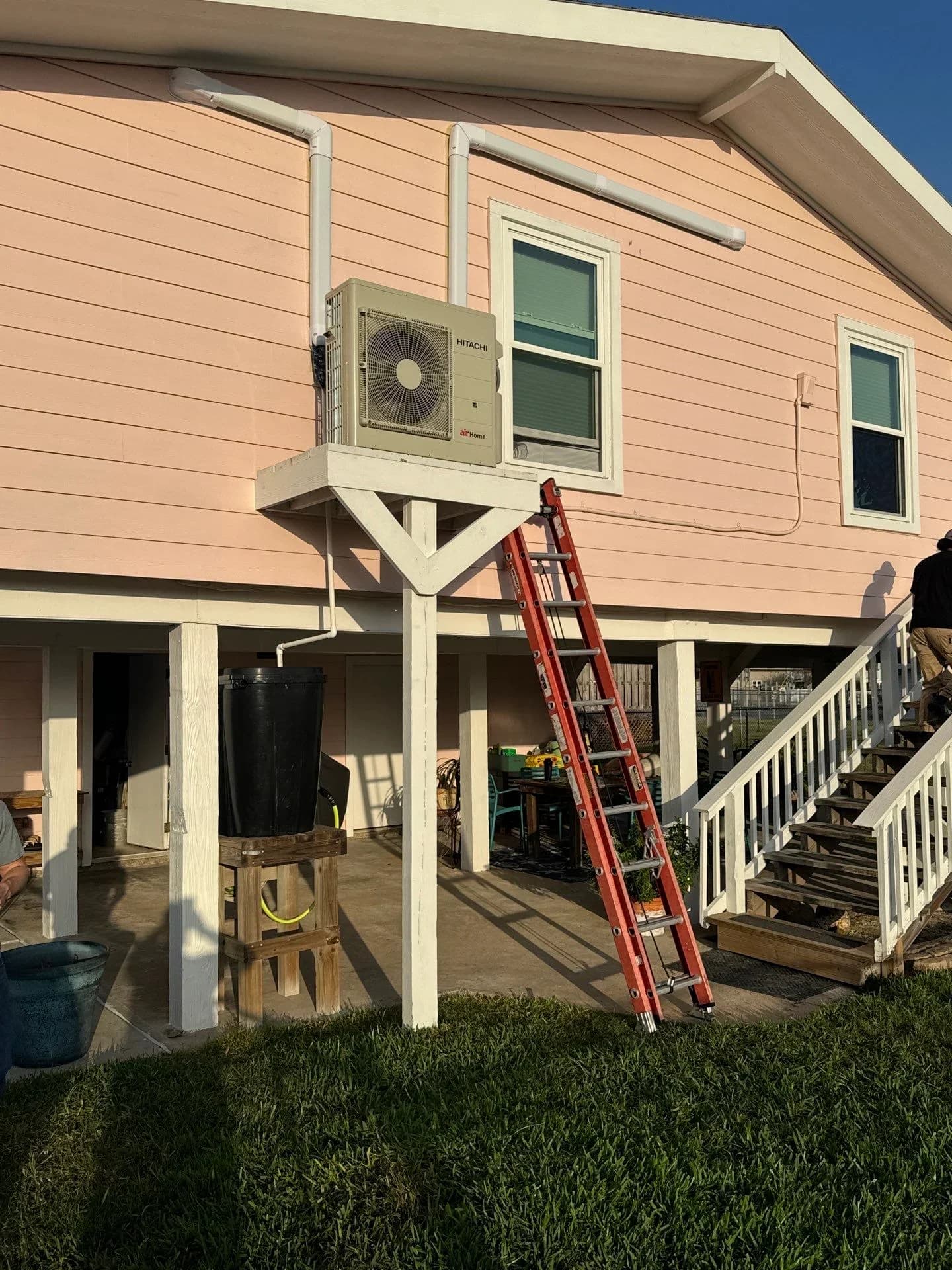
Professional AC Repair in Tiki Island, TX
Coastal Eco Heating & Air provides professional ac repair services to Tiki Island residents and businesses. Fast response, fair pricing, guaranteed satisfaction.
AC Repair in Tiki Island: What You Need to Know
Your AC is running, the thermostat is set to 72, but your house is sitting at 80 degrees and climbing. In Galveston, this scenario plays out hundreds of times every summer, and the causes are almost always tied to living on the coast. Salt corrosion on condenser coils is the number one issue our technicians diagnose on the island and throughout Galveston County — and it's a problem most inland HVAC companies don't fully understand.
Salt Corrosion: The Coastal AC Killer
Your outdoor condenser unit pulls air across aluminum fins to dissipate heat. On the Gulf Coast, that air carries salt particles from the Gulf of Mexico. Over time, salt deposits eat through the aluminum, creating tiny holes and pitting that reduce the coil's ability to transfer heat. The result: your system runs and runs but can't reject heat efficiently. Your indoor temperature climbs, your compressor works overtime, and your CenterPoint Energy bill spikes. We see this in homes from the Galveston seawall all the way to Dickinson and La Marque, though properties within a mile of the water get hit hardest.
The fix depends on severity. Light corrosion can be cleaned with a specialized coil treatment and coated to slow future damage. Heavy corrosion — where fins crumble to the touch — means the condenser coil needs replacement, ideally with a marine-grade coated unit that resists salt buildup.
Low Refrigerant From Corroded Line Sets
The copper refrigerant lines connecting your indoor and outdoor units are vulnerable to the same salt air that attacks your condenser. Salt causes pinhole leaks in copper tubing, letting refrigerant escape slowly over weeks or months. You'll notice your AC gradually losing cooling power. Warm air from the vents. Ice forming on the indoor evaporator coil. A hissing sound near the outdoor unit.
Topping off refrigerant without finding and fixing the leak is throwing money away — especially with R-410A prices climbing and R-22 already phased out. Our techs use electronic leak detectors and nitrogen pressure tests to locate every leak before making repairs. If your line set is corroded in multiple spots, replacing the entire run with coated copper or aluminum lines is the smarter long-term investment.
Clogged Condensate Drains
Galveston's humidity averages above 80% for most of the year. Your AC pulls gallons of moisture from the air daily, and all that water drains through a condensate line. Algae, mold, and sediment thrive in this warm, wet environment. A clogged condensate drain causes water to back up into your drain pan, triggering a safety float switch that shuts your system down entirely. In homes without a float switch, water overflows into ceilings, walls, and insulation.
We clear condensate drains using compressed nitrogen and treat them with antimicrobial tablets. For chronic clog issues — common in older Galveston Island homes with original PVC drain routing — we can reroute the drain with proper fall and add a secondary drain line as a backup.
Capacitor and Electrical Failures
Capacitors are the small cylindrical components that give your compressor and fan motors the jolt they need to start. Gulf Coast heat degrades capacitors faster than moderate climates. A failing capacitor causes your AC to struggle to start, run intermittently, or stop working entirely. You might hear a clicking or humming sound from the outdoor unit. Tropical storm power surges also blow capacitors and can damage compressor windings.
This is one of the more straightforward repairs — a new capacitor typically costs $150 to $300 installed. But it needs to be the correct microfarad rating for your specific unit. We carry common capacitor sizes on our trucks so most repairs are completed in one visit.
Frozen Evaporator Coils
A frozen indoor coil is more dangerous in humid climates like Galveston's. When the ice melts — and it will, either when you turn the system off or when the compressor cycles — all that water has to go somewhere. In dry climates, you get a small puddle. On the Gulf Coast, a frozen coil can release a flood of water that overwhelms your drain pan and causes significant water damage.
Causes include low refrigerant (see above), restricted airflow from dirty filters, or a failing blower motor. The immediate fix is turning the system to fan-only mode and letting the coil thaw completely before restarting. The real fix is diagnosing and correcting the underlying cause.
When Repair Makes Sense vs. Replacement
We'll always give you an honest assessment. For coastal systems, we use a simple guideline: if the repair cost exceeds 40% of a new system's price and the unit is over 8 years old, replacement usually makes more financial sense. Coastal AC systems age faster — an 8-year-old unit in Galveston has endured the equivalent wear of a 12-year-old system in Dallas.
Our $129 Tune-Up Catches Problems Early
Most AC repairs we see could have been prevented or caught early with regular maintenance. Our $129 coastal tune-up (regularly $225) includes condenser coil inspection and cleaning, refrigerant level check, capacitor testing, condensate drain clearing, and electrical connection inspection — all the failure points specific to Gulf Coast systems. We serve Galveston, Texas City, League City, Dickinson, La Marque, and Santa Fe with 24/7 emergency repair service when your AC can't wait.
What a Failing AC Costs You Every Day
A system running at 70% efficiency on a 100°F Galveston day burns $8 to $12 more per day than a properly functioning unit. That's $240 to $360 in wasted electricity every month — on top of the repair cost you're putting off. A corroded condenser coil that reduces heat transfer by 30% forces the compressor to run nearly continuously, spiking your CenterPoint bill while delivering worse cooling.
Here's the math that matters: a $400 repair on a corroded capacitor and coil cleaning restores your system to rated efficiency and saves you $200+ per month in the peak of summer. A $1,200 refrigerant leak repair on a system that's been running 15% low prevents the $3,500 compressor failure that's coming next. Every week you wait costs you money in wasted energy and pushes the equipment closer to a catastrophic failure that costs three to five times more than the repair you delayed.
In Tiki Island, AC Repair comes with unique considerations that our local technicians understand intimately.
Why AC Repair Matters in Tiki Island
Direct Salt Air Exposure
Tiki Island's location in West Galveston Bay subjects HVAC equipment to relentless salt air from all directions. Outdoor units corrode at 2-3x the rate of inland locations, making coastal-rated equipment and quarterly maintenance non-negotiable.
Waterfront Humidity
Surrounded by bay water, Tiki Island experiences some of the highest humidity levels in the region. Standard AC systems cannot adequately control indoor moisture — whole-home dehumidifiers are strongly recommended for every Tiki Island property.
Hurricane Vulnerability
Tiki Island's low elevation and bay exposure make it highly susceptible to storm surge, wind damage, and power surges during hurricanes and tropical storms. HVAC systems need proper anchoring, elevation, and surge protection to survive storm season.
Small Island Access
Tiki Island's single-access bridge and small community mean HVAC service requires a provider familiar with the island. We know Tiki Island well and maintain the parts inventory and scheduling flexibility to serve island residents without delays.
What's Included with AC Repair in Tiki Island
Ready to Schedule AC Repair in Tiki Island?
Our certified technicians are standing by to help with your ac repair needs.
Related Services
Explore more ways we can help you
Other Services in Tiki Island
AC Repair in Nearby Areas
AC Repair Near You in Tiki Island
Find ac repair services in your specific Tiki Island neighborhood or ZIP code
AC Repair by Neighborhood
AC Repair by ZIP Code
Frequently Asked Questions About AC Repair in Tiki Island
Common questions about ac repair services in the Tiki Island area
Why do AC systems fail faster on Tiki Island?
Tiki Island sits directly on Galveston Bay, exposing HVAC equipment to constant salt spray and moisture. Condenser coils corrode 2-3x faster than systems just 10 miles inland. We see more contactor failures, corroded wiring, and compressor burnouts on Tiki Island than anywhere else in our service area. Annual anti-corrosion treatments are essential.
Can you service AC units in Tiki Island's gated community?
Yes, Coastal Eco is an approved service provider for Tiki Island Village. We're familiar with the community's access procedures and the common HVAC configurations in Tiki Island homes. We service both permanent residents and vacation properties on the island.
My Tiki Island home smells musty when the AC runs — what's wrong?
This is extremely common on Tiki Island due to the bay humidity. The cause is usually mold or mildew growth on the evaporator coil or in the ductwork. Our solution includes coil treatment, condensate drain cleaning, and UV light installation to prevent regrowth — all critical for island homes where indoor humidity control is a constant challenge.
Ready for Expert AC Repair in Tiki Island?
Join hundreds of satisfied Tiki Island customers who trust Coastal Eco Heating & Air for professional ac repair service.
Serving Tiki Island and surrounding areas • Same-day service available